

Traditional precision machining often faces challenges such as precision fluctuations and insufficient yield during mass production. To solve these problems, modern manufacturing is building a new production system through digital technology. First, digital twin technology converts processing equipment, tool and part parameters into virtual models to achieve preview optimization of process flow; second, the intelligent compensation system collects processing data in real time and dynamically adjusts equipment operating parameters to compress the error control range to 0.005 mm; at the same time, the industrial Internet of Things platform monitors the entire production process at millisecond level to detect and block quality deviations in a timely manner. These technological breakthroughs not only significantly improve the batch processing stability of complex parts, but also form a replicable digital production framework, providing a feasible technical path for industrial enterprises to transform to Industry 4.0.
Digital Twin Drives Precision Machining
Modern factories build virtual copies of parts in computers that are exactly the same as the real objects by establishing digital twin models of parts. This system can receive processing data from sensors in real time, such as machine tool vibration amplitude, tool wear degree and material deformation, and synchronize this information to the digital model for analysis. When engineers adjust the cutting speed or feed rate, the digital twin system will immediately simulate the impact of parameter changes on the accuracy of the finished product, helping to quickly find the best processing solution. After applying this technology, an automotive parts manufacturer successfully shortened the crankshaft processing and debugging cycle by 40%, while avoiding the problem of batch scrapping caused by incorrect parameter settings. This combination of virtual and real not only improves the first-piece success rate of complex parts, but also establishes a reliable data benchmark for subsequent large-scale production.
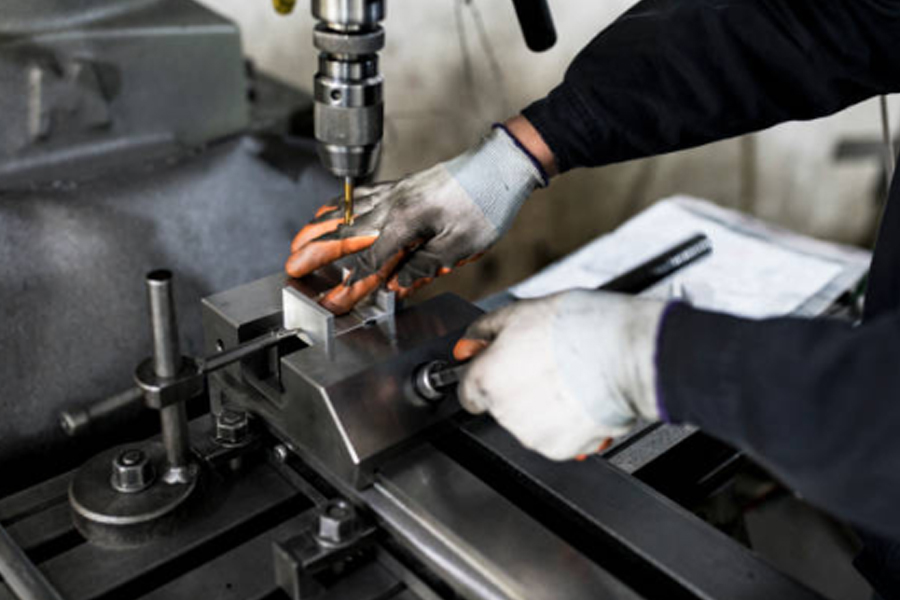
Intelligent compensation controls processing errors
In the actual processing process, even if the equipment accuracy is high, changes in ambient temperature or tool wear may still cause subtle errors. The intelligent compensation system automatically calculates the compensation amount and adjusts the processing path by collecting key parameters such as machine tool vibration and cutting force in real time, combined with the preset processing target value. For example, when the sensor detects that the tool wear causes the aperture to be 0.002 mm larger, the system will immediately correct the spindle feed speed or replace the spare tool to ensure that the final size is stable within the range of ±0.005 mm. This dynamic adjustment capability not only reduces manual intervention, but also increases the batch production yield of complex parts to more than 98%. With the continuous optimization of the algorithm model, the compensation response time has been shortened to the millisecond level, providing a reliable guarantee for high-precision mass production.
Industry 4.0 transformation mass production plan
Under the framework of Industry 4.0, the high-precision mass production plan has achieved a qualitative leap through equipment interconnection and data integration. The factory connects the processing equipment to the industrial Internet of Things platform, collects core parameters such as spindle speed and tool wear in real time, and automatically matches the optimal process combination. For example, when the system detects that the hardness of a batch of materials fluctuates, the intelligent algorithm will synchronously adjust the feed speed and coolant flow to ensure processing stability. This dynamic optimization mode enables the production line to process hundreds of complex parts orders at the same time, reducing unit costs by more than 30%. More importantly, the historical processing data stored in the cloud provides a reference for new product development, shortening the cycle from design verification to mass production. By building a replicable intelligent production unit, enterprises can meet customized needs while maintaining the cost advantage of large-scale production.
Real-time monitoring improves production yield
After the intelligent compensation system realizes error correction, the production process enters the continuous optimization stage. By deploying a highly sensitive sensor network, the equipment can collect more than 500 sets of key parameters such as temperature, vibration, and cutting force per second, and transmit the data to the central analysis platform in real time. When the tool wear exceeds the preset threshold, the system automatically triggers an early warning and generates a maintenance work order to avoid batch scrapping due to equipment performance degradation. After adopting this solution, a certain automotive parts production line increased the turbine blade processing qualification rate from 92% to 98.3%, while reducing the frequency of manual sampling by 60%. This all-weather monitoring mechanism not only ensures product consistency, but also continuously optimizes the process parameter library through historical data accumulation, providing a precise control basis for the production of parts of different materials.
Through the verification of actual production scenarios, the combination of digital technology and precision machining has shown remarkable results. Digital twin modeling not only makes the processing process transparent and visible, but also predicts the impact of equipment wear on accuracy in advance; the real-time process monitoring system collects data thousands of times per second, and includes variables such as temperature fluctuations and tool offsets in the dynamic control range; and the intelligent compensation module can automatically adjust the processing parameters to continuously compress the error to below the millimeter level. This technology integration not only solves the problem of relying on manual experience in traditional production, but also stabilizes the yield rate of mass production of complex parts at more than 98%. With the deepening of the transformation of Industry 4.0, building a standardized digital process database and optimizing multi-device collaborative compensation algorithms will become the key path to break through the threshold of higher precision and provide reliable support for high-end manufacturing in the fields of aerospace, medical equipment, etc.