

On the stage of manufacturing, processing technology is like dancers of different schools, each showing its unique charm. CNC precision machining and traditional machining are two "performers" with different styles. Although they belong to the same processing field, they have distinct differences in precision, efficiency, and applicable scenarios. Many manufacturing companies are often confused when choosing processing methods: What is the difference between the two? Where are their respective advantages? Next, we will take you to an in-depth understanding of the core differences between the two processing technologies from an anthropomorphic perspective, and provide a reference for your production decision.
CNC precision machining and traditional machining are like "precision artists" and "practical craftsmen" in the manufacturing industry. Although they are both technologies for creating parts, they show different characteristics in multiple dimensions. This article will compare the processing accuracy, degree of automation, applicable scenarios, flexibility and efficiency, cost-effectiveness, etc., analyze the core differences between the two, and help readers clearly understand their respective advantages and scope of application, so as to make more appropriate choices in actual production.
Processing accuracy: a leap from "millimeter level" to "micrometer level"
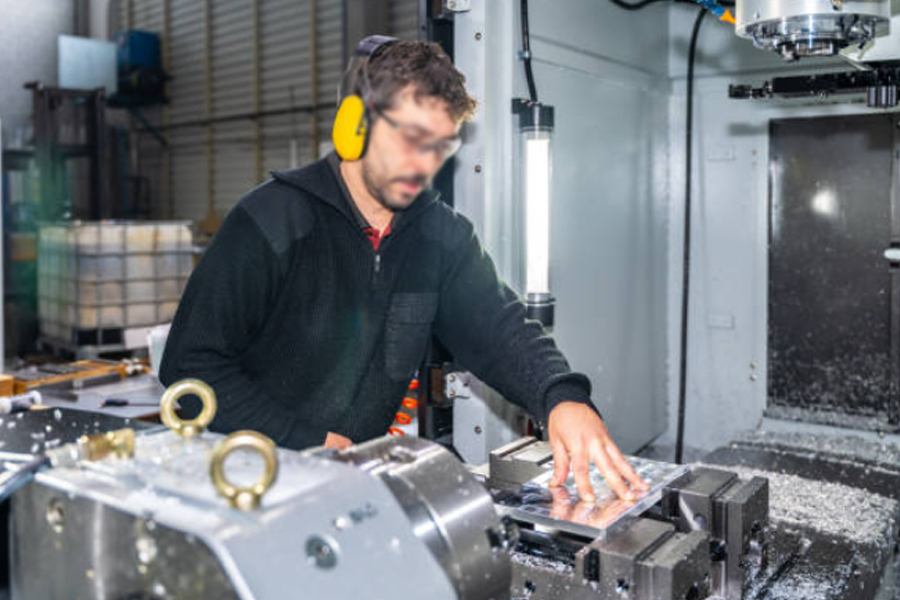
Traditional machining is like an experienced "craftsman", relying on the operator's skilled skills and manual adjustments to control the processing accuracy. Its machining accuracy is usually at the millimeter level, which is suitable for machining parts with relatively low precision requirements, such as some parts with simple structures and large tolerance ranges. During the machining process, the operator needs to pay attention to the operating status of the machine tool at all times and adjust the position of the tool and cutting parameters based on experience, just like a painter controls the strength and angle of the brush by hand.
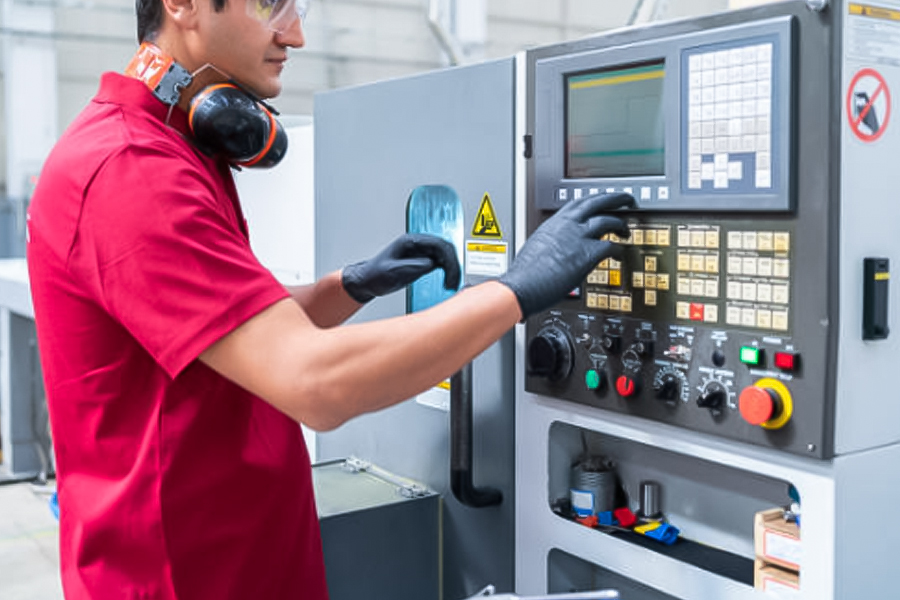
CNC precision machining is like a "precise digital artist" who uses a computer numerical control system (CNC system) to achieve precise control of the machining process. It can achieve micron-level machining accuracy, which means that high-precision parts with extremely small dimensional errors and extremely low surface roughness can be machined. The CNC system is like an intelligent brain that converts design drawings into precise digital instructions and controls every movement of the machine tool, whether it is linear motion or circular motion, to strictly follow the preset trajectory, as if it is engraving on the material with a precise ruler to ensure that every detail meets the design requirements.
Automation level: the transition from "manpower-led" to "intelligent control"
The production process of traditional machining relies heavily on the skills and experience of the operator. From installing the workpiece, adjusting the tool to setting the machining parameters, all require manual work by the operator. Just like a chef who controls the heat and seasoning in the kitchen with years of experience, every step requires human participation. This processing method has high requirements for operators, relatively high labor costs, and production efficiency is easily affected by the operator's status and skill level.
CNC precision machining achieves a high degree of automation. Once the machining program is entered into the CNC system, the machine tool can automatically complete the entire machining process according to the program, including the positioning of the workpiece, the replacement of the tool, the adjustment of the machining parameters, etc. The operator only needs to compile the program and clamp the workpiece before machining, and perform necessary monitoring during the machining process. This is like an intelligent robot, working tirelessly according to pre-set instructions, greatly reducing manpower input, and improving production efficiency and machining consistency. The CNC system also has real-time monitoring and fault diagnosis functions, which can promptly detect problems in the machining process and take corresponding measures to ensure the stability and reliability of the machining process.
Applicable scenarios: subdivision from "mass production" to "precision customization"
Traditional machining is more suitable for mass production of some parts with simple structures and low precision requirements due to its relatively simple operation and low equipment cost. For example, in the processing of some common mechanical parts, such as standard parts, simple flanges, gearboxes, etc., traditional machining can give full play to its advantages of high efficiency and stability to quickly meet the needs of mass production. Just like workers on the assembly line, focusing on repetitive simple operations, they can produce a large number of products in a short time.
CNC precision machining shows unique advantages in the field of precision parts processing. It is suitable for processing parts of various complex shapes, such as high-precision bearings, complex structural parts in the aerospace field, and precision connectors in the electronics industry. These parts often have high precision, high complexity, and high surface quality requirements, which are difficult to meet with traditional machining. CNC precision machining can realize the processing of complex surfaces through programming, just like an artist creating a complex sculpture, which can accurately present every detail of the design. At the same time, for small batches or even single-piece precision parts processing, CNC precision machining can also rely on its flexible programming and rapid adjustment capabilities to efficiently complete the task.
Flexibility and efficiency: Finding a balance between change and stability
When faced with product design changes or adjustments to processing requirements, traditional machining requires operators to readjust machine tool parameters, replace tools, and even reinstall workpieces. This process often takes a long time and has relatively poor flexibility. Just like a traditional craftsman, when customer needs change, it is necessary to rethink and adjust the production process, which consumes more time and energy. However, in stable mass production, traditional machining can maintain high production efficiency because operators are already very familiar with the processing process and the state of the machine tool is relatively stable.
CNC precision machining has strong flexibility. When different parts need to be processed, only the processing program needs to be changed, without large-scale adjustments to the machine tool. This is like a multifunctional smart device that can achieve different functions by changing different software programs. When faced with multi-variety, small-batch production needs, CNC precision machining can quickly switch processing tasks and improve production flexibility and adaptability. At the same time, CNC precision machining has a high degree of automation and a stable processing process. It can achieve high production efficiency while ensuring accuracy, especially when processing complex parts, its efficiency advantage is more obvious.
CNC precision machining and traditional machining are like two protagonists on the stage of manufacturing, each shining with its own unique brilliance. CNC precision machining has become the "leader" in the field of precision manufacturing with its micron-level precision, high degree of automation and powerful complex parts processing capabilities; traditional machining has maintained its position with its easy operation, low equipment cost and stability in mass production. The difference between the two in terms of processing accuracy, degree of automation, applicable scenarios, flexibility and efficiency is precisely to meet the diverse production needs of the manufacturing industry.