

In modern manufacturing, the processing quality of high-precision parts directly affects the performance of high-end equipment. When companies face the need for parts processing, "choosing precision processing or ordinary CNC processing" becomes a common problem. Although these two technologies belong to the category of CNC processing, there are significant differences in technical principles, precision levels and application scenarios. This article will analyze the core differences and applicable scenarios of the two based on technical characteristics and actual needs.
Technical principles: from "digital control" to "precision revolution"
Ordinary CNC processing (computer numerical control processing) drives the machine tool spindle and tool through G code programs to achieve milling, turning and other processing of metal or non-metallic materials. Its core advantage is to get rid of manual operation errors and can stably achieve millimeter-level (0.01-0.1mm) accuracy to meet the processing needs of most conventional parts, such as automotive parts, general mechanical accessories, etc.
Precision processing is an advanced form of CNC technology. By equipping high-precision servo motors, nano-resolution encoders and constant temperature processing environments, the accuracy control is improved to micron level (0.001-0.01mm). This type of equipment is usually equipped with cutting-edge components such as air static pressure bearings and laser ranging feedback systems. It can compensate for mechanical vibration and thermal deformation in real time during the processing process, and realize ultra-precision processing of complex curved surfaces such as aerospace blades and optical lenses.
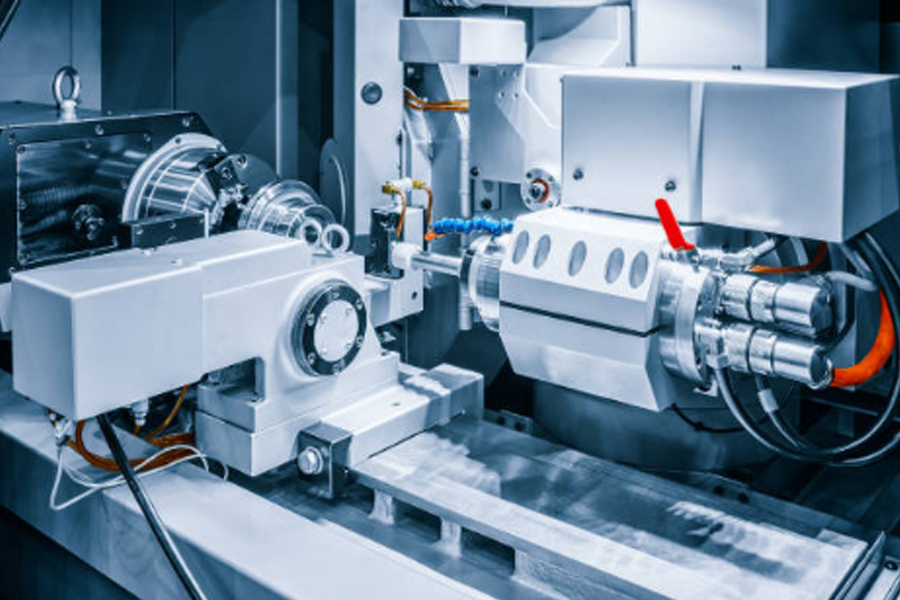
Precision boundaries: Redefining the application scenarios of "high precision"
The upper limit of precision of ordinary CNC processing is limited by machine tool rigidity, tool wear and ambient temperature. It is suitable for parts with medium requirements for matching tolerances, such as reducer gears and electronic equipment housings. Its advantages are high cost performance, fast processing efficiency, and suitable for mass production of standardized parts.
Precision processing is aimed at the stringent requirements of aerospace, medical equipment, semiconductors and other fields. Taking medical implants as an example, the surface roughness of artificial joints must be controlled below Ra0.1, and the geometric accuracy error must not exceed 5 microns. Such requirements can only be achieved by precision processing technology. Its core value lies in breaking through the precision limit of conventional processing and providing "zero defect" core components for high-end equipment.
Cost and efficiency: the art of balancing technology selection
The equipment investment for ordinary CNC processing is relatively low, and the maintenance cost is controllable, which is suitable for small and medium-sized batch production and rapid proofing. When the precision requirement of parts is IT7-IT8 (national standard tolerance level), choosing ordinary CNC machining can not only ensure quality but also control costs.
Precision machining means higher technical investment: constant temperature workshop construction, ultra-precision machine tool procurement, professional process debugging, etc. all require significant upfront costs. However, its irreplaceability lies in solving the technical problems that "conventional machining cannot complete", especially in the processing of single-piece and small-batch high-end parts, the precision advantage of precision machining far exceeds the cost considerations.
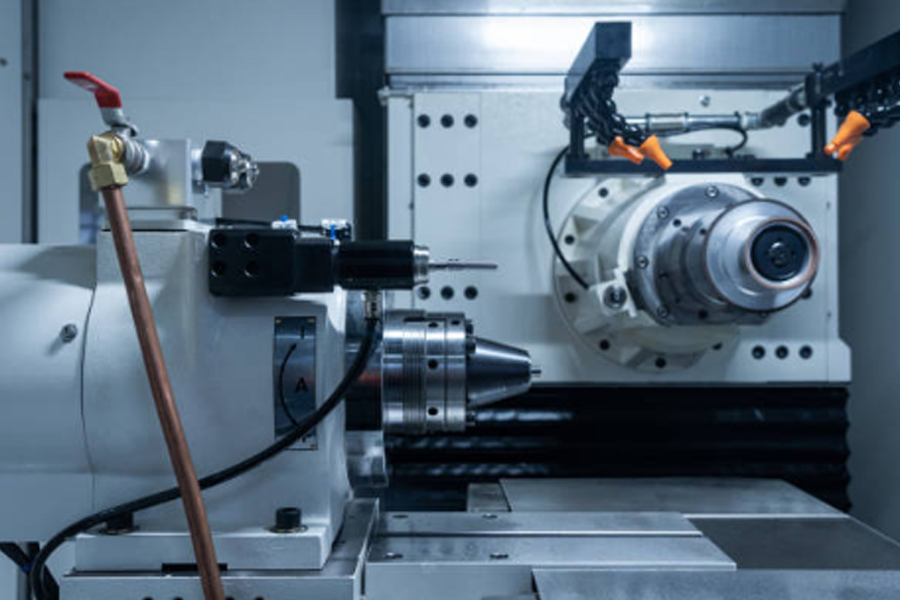
How to choose: technical decision based on demand
When choosing a processing solution, enterprises need to give priority to evaluating three major factors:
● Accuracy requirements: clarify the dimensional tolerance, form and position tolerance and surface roughness standards of the parts to determine whether they exceed the capabilities of ordinary CNC machining;
● Material properties: difficult-to-process materials such as titanium alloys and high-temperature alloys often require the rigidity and temperature control capabilities of precision machining equipment to support;
● Application scenarios: general mechanical parts can be processed by ordinary CNC, while key functional components (such as aircraft engine impellers and photolithography machine lenses) must rely on precision machining technology.
Precision machining and ordinary CNC machining are not in opposition, but complementary technical levels in the pyramid of manufacturing. Ordinary CNC machining is the cornerstone of industrialized mass production, while precision machining is the sharp edge to break through technical bottlenecks. Enterprises should choose the most suitable machining solution based on their own parts precision requirements, material properties and budget costs. Whether it is conventional manufacturing that pursues economies of scale or high-end fields that overcome technical barriers, the two technologies jointly promote "Made in China" to move towards high precision and high reliability.